MTL-1
by Miles Critchley-Hope
MTL-1
MTL-1
Medium:
YoM:
Series
Dimensions:
Glass
2021
MNFCTR
715 x 600 mm (Unframed)
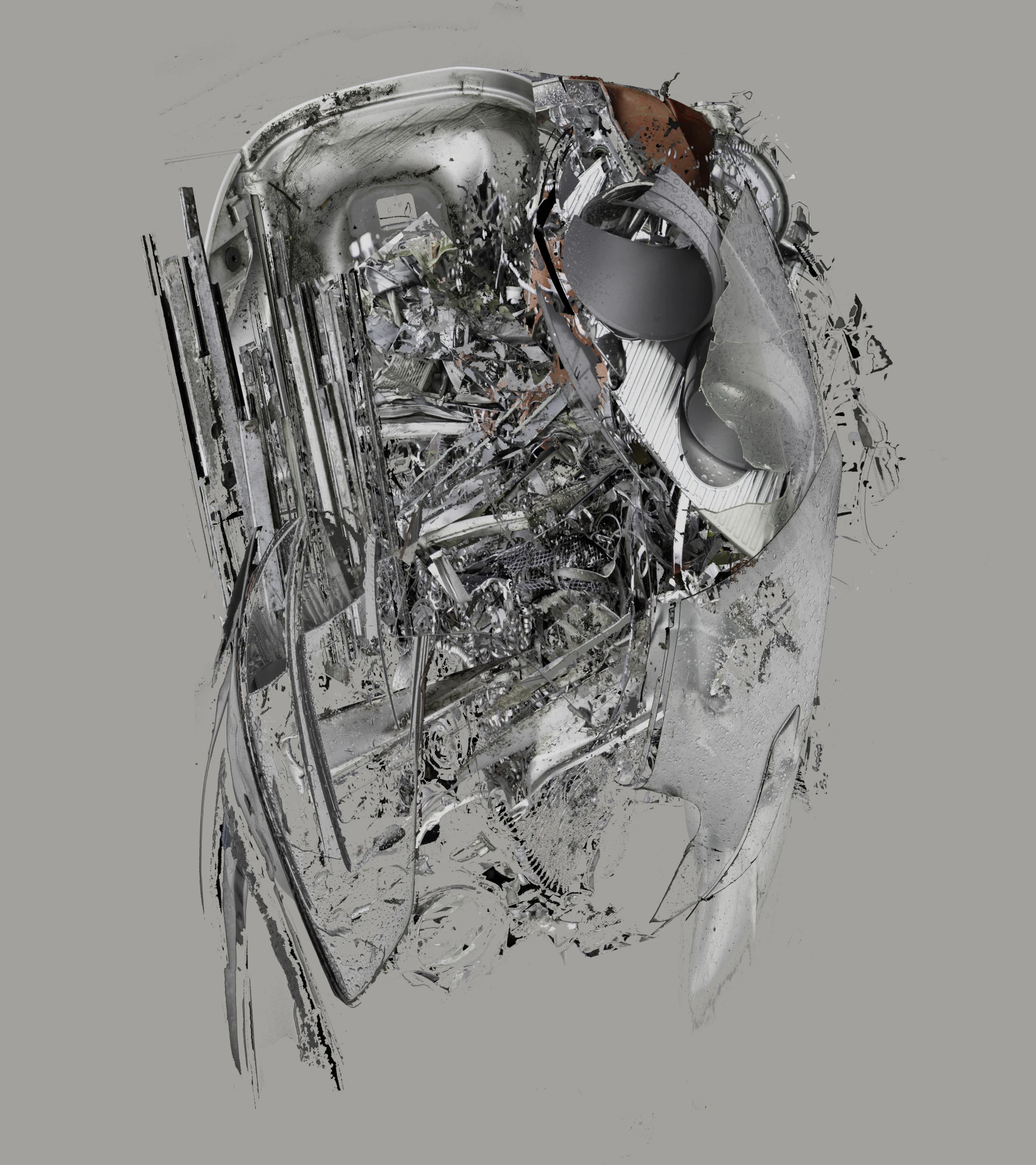
This abstract photo-collage was composed of photographs the artist took as cars were being crushed at a landfill. As Critchley-Hope was forced from the dangerous premises due to potential physical liability, he took the piece of aluminium upon which it is printed from a skip. (The aluminium was then run through a carwash). This work's violence and torturous pain - particularly when one thinks about it in the context of the MNFCTR Series as a whole - is palpable. Further, this fierce work is physically nearly indestructible formally. Hence, there exists a juxtaposition: the course consumption of man’s destruction with Miles' repurposing the experience thereof.
Digital UV toughened glass with powder coating; shot with Canon 90D, 2021 (signed).
£6,500

ARTIST BIO: Miles Critchley-Hope
From the first day he picked up a camera at the age of thirteen, he was immediately interested in our relationship with the natural world around us and the ways in which we consume its finite resources.
Mankind’s ability and audacity to shape the land at will has inspired his style: Miles utilises an unnatural and violent composition to outshine nature’s untouched and monumental landscapes. By idolising the remaining natural beauty of our planet through the gaze of the Anthropocene, he is able to contribute something innovative to the photographic community. In this way does he broaden the conversation of photography’s definition and abilities.
To find these unspoilt landscapes, Miles travelled alone through Argentina, Chilé, Bolivia and Peru. The seven pieces that compose the LNDSCP series are a product of the precious and protected national parks and areas of natural beauty across South America - from Torres Del Paine at the southern tip of Chilé to the Rainbow Mountains 5628km north in Peru. The thorough protection of these areas ensures that potentially harmful activities such as hunting, logging and mining are strictly prohibited, benefiting the flora, fauna and human populations of the continent.