
Gareth Lloyd, Beyond the Surface: The Space Between
by Anastasia Stravinsky
I write…
I write: I write…
I write: “I write…”
I write that I write…
This is how one of the chapters in Georges Perec’s Species of Spaces begins. The study of space remains one of the most persistent and relevant quests in art—not simply an exploration of emptiness, but an attempt to grasp the very fabric of space: its invisible density, its immateriality capable, paradoxically, of taking on form.
“I write in order to pass through myself,” says Henri Michaux, who sought to erase all possible boundaries between reality and fantasy, between the depicted and the act of depiction. That same impulse resonates in the practice of Gareth Lloyd, whose artistic language investigates the edges: not of emptiness, nor of reality, nor even of the visible, but of a new intersection where multiple spatial narratives, images, and histories collide upon a single plane.
His painting is not a representation but a topography of perception. Like a sphinx, he encodes in his works small puncta—clues to be deciphered by the viewer, who becomes a detective moving through an uncertain history. These clues often appear as recognizable cultural icons: the monumental golden letters of 20th Century Fox, designed by Emil Kosa in 1935, or the Dreft detergent box, one of the first synthetic washing powders released in 1933. In works such as Leaving the 20th Century and Adolescent Girl these symbols merge with faint, elusive sketches that together form a para-narrative, a story viewed from beyond the visible. Here, Gareth Lloyd’s art transcends the merely aesthetic. His language bears witness to the material image of reality itself: its structure, its rhythm, and its inner fabric.
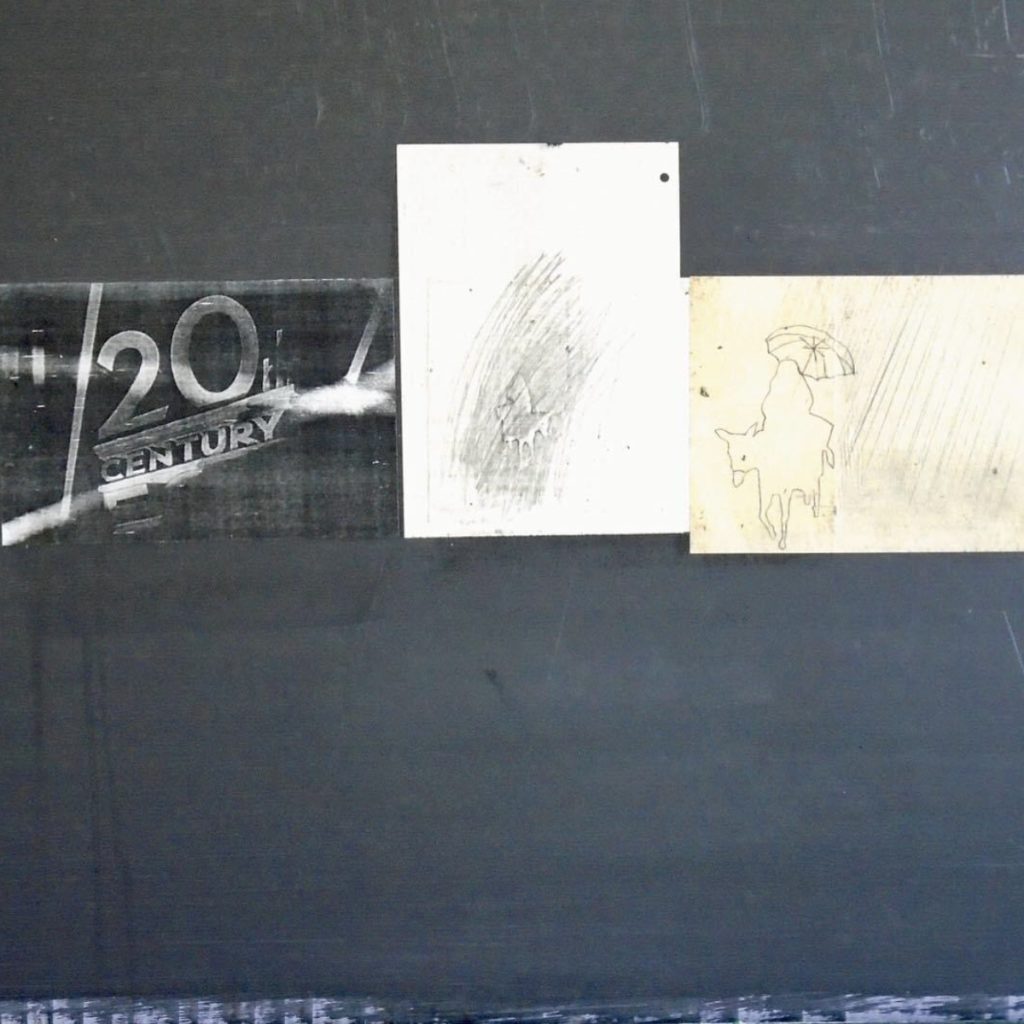
Leaving the 20th Century
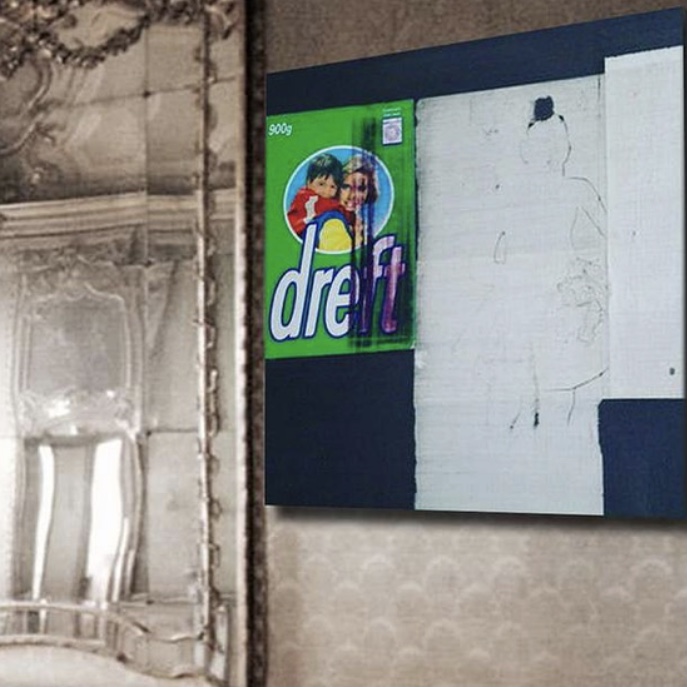
Adolescent Girl
The most intriguing of his works are the portraits, which recall the artistic practices of the early twentieth century—a subtle bow to Leaving the 20th Century and to Suprematism. Like Kazimir Malevich, who built a new paradigm of consciousness, Gareth Lloyd places within dialogue the entire drama of spatial transformation in modern visual culture. Malevich’s “new construction, having nothing in common with nature,” revealed not form but coordinates—the coordinates of consciousness, where the artist becomes an architect of the cosmos.
On one side lies the image of confinement, the geometric enclosure so characteristic of the Russian psyche. It echoes Dostoevsky’s Crime and Punishment, where Raskolnikov’s room “resembled more a cupboard than a flat,” and Daniil Kharms’ story The Chest, in which “a man with a thin neck climbed into a chest, closed the lid and began to suffocate.” Enclosure here becomes an image of death and of its transcendence. On the other side, space opens into infinity: the Trans-Siberian Railway stretching from West to East, toward China—the Celestial Empire (Tian—“sky”, Xia—“the base”). In this movement from confinement to vastness, Malevich’s square turns into the projection of a celestial object, rising upward.
Within this system of coordinates, Gareth Lloyd develops his own topology. In works such as Nova K and Fleeting Star he introduces an added element—a shadow of perfection, something that hovers above, striving or vaulting. The topography of the canvas thus ceases to be a flat surface; it becomes a launch pad for exploring emergence, for tracing the gesture of ascent. Within these layers lies the genetic structure of the universe: the same search that animated the Russian avant-garde, a laboratory of painting where geometric constructions act as projections of the dynamics of civilization and culture, provoking further evolution and subtly altering the structure of reality itself.
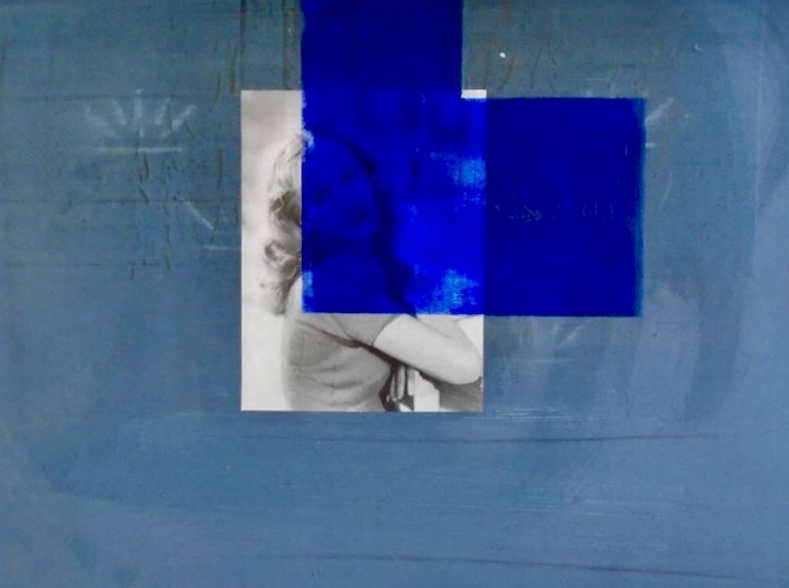
Nova K
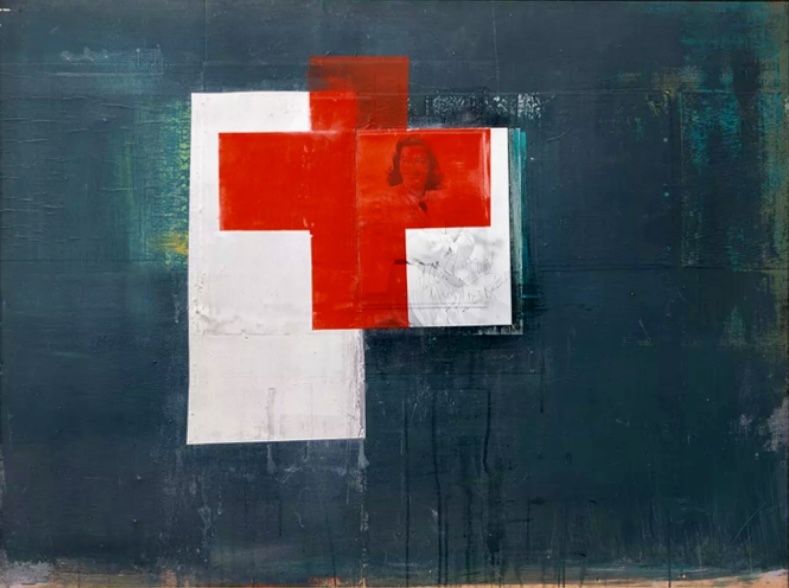
Fleeting Star
It is not by chance that Gareth Lloyd brings together on a single plane—both horizontal and vertical—the cultural elements of East and West. They coexist in his work as spectral outlines, breath-like intervals, evoking the Japanese school of suiboku-ga, where the essence lies not in the object but in the ma, the space between. Here, what matters is not the thing, but the rhythm of the brushstroke; not the image, but its breath; not the solidity of form, but its vanishing.
In this sense, the pictorial space of Gareth Lloyd unfolds as a signal, a sign, acquiring its own order and articulating itself as a text. A text that lives according to its own laws, activates itself through its superimposition on space, and inscribes itself into the broader story of humanity.
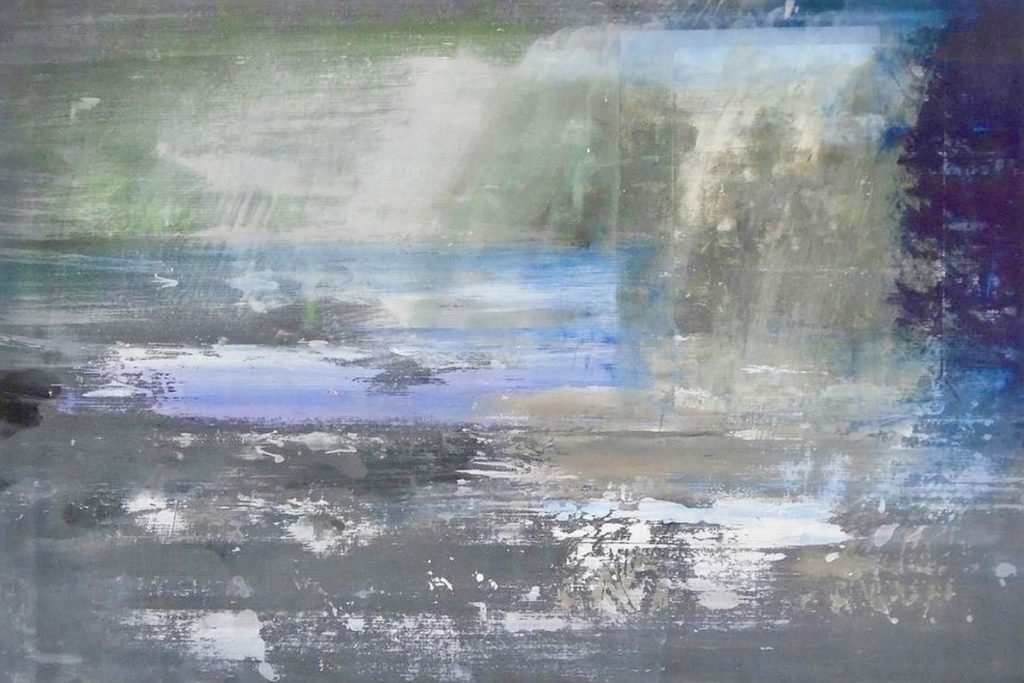
Untitled
Gareth Lloyd’s art teaches us to exist in a state of weightlessness—to forget the horizontals and verticals of the canvas and move instead into the oblique, conquering the space beyond the meta- space. Perhaps it is fitting to recall Saint-Exupéry’s image of the hat and the boa constrictor that swallowed an elephant, where reality is never simply what it seems. Sometimes the viewer must not merely peel back layers, but step through one of them, into the mirror world where another density begins—the true space of art.
Author Bio: Dr. Anastasia Kozachenko-Stravinsky
Dr. Anastasia Kozachenko-Stravinsky is a distinguished art historian, curator, and cultural leader.
Since 2012, Anastasia has built a curatorial career across major Russian institutions, such as the National Centre for Contemporary Art, Garage Museum, and the State Exhibition Hall “PARK”, realising over 60 exhibitions, festivals, and concerts. In 2014 she founded and now heads the Stravinsky Family Fund, a Russian non-profit devoted to developing and promoting 20th- and 21st-century musical culture. She is also active in scholarly and critical art communities: member of the scientific secretariat of the Centre for Studies in Russian Art (CSAR), member of the International Association of Art Critics (AICA), and holds roles in international exhibition and publication projects.
To view the other essays about Gareth Lloyd’s work by Shahidha Bari, Paul Ryan, Jeremy Reed as well as other updates from FEIN Collections in Bruton please visit our News section.
